
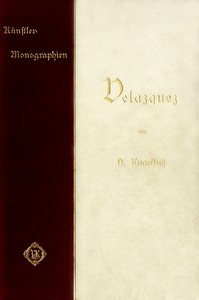
Velazquez by H. Knackfuss
Okay, let's be clear from the start: this isn't a new, glossy coffee table book. Hermann Knackfuss's 'Velázquez' is a little volume from around 1900, part of a series on great artists. It feels like a time capsule. Knackfuss, a German artist and writer, sets out to introduce Diego Velázquez to a general audience. The 'story' here isn't a novelistic plot, but the journey of understanding an artist.
The Story
Knackfuss walks us through Velázquez's life, from his early training in Seville to his long career as the leading painter in the court of King Philip IV of Spain. He describes the famous works—the dignified portraits, the breathtaking 'Las Meninas,' the powerful 'Surrender of Breda.' But the interesting part is how he tells it. He's working with the information available before modern art scholarship. You see him piecing together Velázquez's character from the paintings themselves, praising his truthfulness and his incredible skill at capturing life. The 'conflict' is subtle: it's Knackfuss trying to lift Velázquez out of the category of a mere 'Spanish painter' and place him among the absolute masters of Europe, arguing for his timeless importance.
Why You Should Read It
This book is a double portrait. You get a clear, respectful look at Velázquez, but you also get a fascinating look at how people thought about art in 1900. Knackfuss's writing is earnest and full of admiration. He gets genuinely excited about the way Velázquez paints a lace collar or the weary face of a king. Reading his descriptions makes you look at the paintings more closely. It's not cold analysis; it's a fan letter from another artist. You feel the bridge between the 17th and the 20th centuries. It reminds you that our view of the 'old masters' wasn't always fixed—it was built by passionate writers like Knackfuss.
Final Verdict
This is a perfect little read for art lovers who already know Velázquez's work and want a new perspective. It's for the person who visits a museum and wonders, 'How did people talk about this painting 100 years ago?' It's not the definitive biography (we have newer ones for that), but it's a thoughtful, historical document in its own right. If you enjoy feeling connected to the history of art appreciation itself, you'll find this old book surprisingly fresh and engaging.
Legal analysis indicates this work is in the public domain. It is available for public use and education.
James Taylor
1 year agoVery helpful, thanks.
Christopher Miller
1 month agoI stumbled upon this title and the arguments are well-supported by credible references. I learned so much from this.
Joseph Lee
3 months agoThe fonts used are very comfortable for long reading sessions.
Donald Anderson
1 month agoTo be perfectly clear, it manages to explain difficult concepts in plain English. I will read more from this author.








Deborah Lewis
1 week agoAfter hearing about this author multiple times, the content flows smoothly from one chapter to the next. This story will stay with me.