
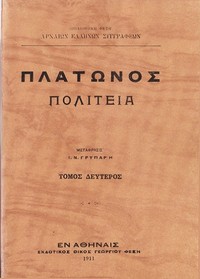
Πολιτεία, Τόμος 2 by Plato
Okay, let's set the scene. There's no traditional 'plot' here—no heroes on a quest, no murder mystery to solve. Instead, picture a long, winding conversation among friends in ancient Athens. The thinker Socrates is the main voice, batting ideas back and forth with a group that includes the fiery Thrasymachus and the earnest Glaucon. The whole thing is a giant 'what if.'
The Story
In this second volume, the conversation really kicks into high gear. They've agreed to search for the meaning of justice by designing a perfect city, a 'city in speech.' They start simple, with a basic, healthy society. But Glaucon calls it a 'city of pigs' and pushes for a more luxurious, feverish state. This forces them to invent a guardian class—philosopher-kings and queens—to rule it. The rest of the book is them figuring out the wild rules for this ruling class: intense education, no private property, shared spouses and children (yes, really), and strict censorship of the arts. They're trying to build a society where the rulers have zero personal stake, so they can only ever act for the common good. It's a logical puzzle taken to its extreme conclusion.
Why You Should Read It
Don't read this to agree with it. I certainly don't agree with most of Plato's prescriptions—the censorship and eugenics are hard to swallow. Read it to wrestle with it. The sheer audacity is thrilling. Plato uses this imaginary city to probe the connection between the human soul and the political state. His questions are timeless: What is the cost of stability? Can people truly be made selfless? Is a 'noble lie' okay if it keeps society together? Socrates is a brilliant, sometimes frustrating character, dismantling weak arguments and pushing logic to uncomfortable places. You'll find yourself arguing with the page, which is the whole point.
Final Verdict
This is for the intellectually curious reader who loves big ideas. It's perfect for anyone who enjoys dystopian fiction like 1984 or Brave New World but wants to see the utopian blueprint those worlds reacted against. It's also great for fans of deep, Socratic-style debate. If you're looking for a fast-paced narrative, look elsewhere. But if you want to spend time inside one of history's most influential minds, questioning the foundations of society, this is your book. Just be prepared—you might not like all the answers, but you'll love the journey of getting there.
This content is free to share and distribute. Enjoy reading and sharing without restrictions.
Emma Garcia
9 months agoNot bad at all.









Melissa Lewis
1 year agoBased on the summary, I decided to read it and the depth of research presented here is truly commendable. I learned so much from this.