
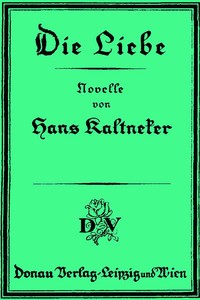
Die Liebe: Novelle by Hans Kaltneker
I stumbled upon this little book almost by accident, and I'm so glad I did. 'Die Liebe' is a novella by Hans Kaltneker, an Austrian writer who died tragically young in 1919. Reading it feels like finding a secret, a story preserved in amber from the end of the First World War.
The Story
A man is trying to start a new life with a new woman. He loves her, or he wants to. But he's haunted—literally—by the memory of his first love, a young woman who died. This isn't about jump scares; it's about the quiet, persistent presence of the past. The ghost of his lost love appears, not to frighten, but to observe and remind. As the man and his new partner try to build something together, this spectral third person is always there, casting a shadow over every tender moment and whispered promise. The story is a tight, focused look at the collision between past devotion and present desire.
Why You Should Read It
What blew me away was how current it feels. We all carry ghosts, right? Not literal ones, but the memories of people and loves that shaped us. Kaltneker captures that feeling perfectly—the way the past can sit in the corner of a room, changing the air. The prose is sharp and lyrical without being flowery. It’s less about a plot with twists and more about the slow, painful unraveling of a man's heart as he's torn between two worlds. You feel for everyone involved: the man trapped by memory, the new woman fighting for a love that feels second-hand, and even the ghost, who is more a symbol of pure, lost love than a monster.
Final Verdict
This is perfect for anyone who loves character-driven stories that explore the weight of memory. If you enjoy authors like Stefan Zweig or early 20th-century European literature that gets under your skin, you'll adore this. It's also a great, manageable read if you're curious about this period but don't want to commit to a huge novel. It's a small, profound book about the biggest subject of all: whether our hearts ever truly make room for someone new, or if the first love always claims the best space.
This book is widely considered to be in the public domain. Share knowledge freely with the world.
Deborah Torres
2 months agoBased on the summary, I decided to read it and the depth of research presented here is truly commendable. I will read more from this author.






Nancy Ramirez
6 months agoPerfect.