
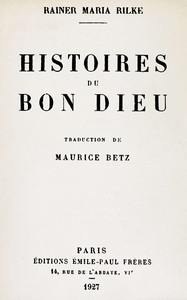
Histoires du bon Dieu by Rainer Maria Rilke
Let's be clear: this isn't a novel with a traditional plot. Histoires du bon Dieu (or Stories of God) is a collection of short, poetic tales written early in Rilke's career. They read like gentle, philosophical fables.
The Story
Rilke paints a picture of God that's far from the distant, all-powerful ruler. Here, God is almost a neighbor. He walks the earth in disguise, visiting ordinary people—a shoemaker, a group of children, a doubting man. He listens to their problems, observes their simple lives, and often finds Himself confused or moved by what He sees. In one story, God seeks a shoemaker's advice on how to better connect with humanity. In another, He's deeply affected by the sincere, flawed faith of a common person. The 'plot' of each story is this quiet encounter, where the divine and the human meet not in a blaze of glory, but in a conversation over a workbench or a moment of shared silence. The central thread is God's own search for understanding and a more genuine relationship with the world He created.
Why You Should Read It
I loved this book for its breathtaking humility. Rilke isn't trying to preach or convert. He's imagining. He takes the biggest concept we have and makes it approachable, vulnerable, and curious. The beauty is in the questions, not any answers. What does God think about human suffering? Does He ever feel lonely in His perfection? By making God a wanderer among us, Rilke flips the script on spirituality. It becomes less about worship from afar and more about a mutual, searching gaze. The prose is pure poetry—simple on the surface but layered with meaning. It feels like a series of quiet, luminous moments that stick with you.
Final Verdict
This book is perfect for the thoughtful reader, the poet at heart, or anyone tired of rigid religious discourse. It's for people who enjoy authors like Antoine de Saint-Exupéry (The Little Prince) or the philosophical tales of Kafka and Borges, but with Rilke's unique, tender touch. Don't come looking for action or doctrine. Come looking for a quiet hour of wonder, for stories that feel like small, perfect windows into a different way of seeing the world and our place in it. It's a slim book with a surprisingly large soul.
This publication is available for unrestricted use. Distribute this work to help spread literacy.
Donald Jackson
1 year agoI started reading out of curiosity and it provides a comprehensive overview perfect for everyone. A valuable addition to my collection.
Betty Allen
1 year agoSolid story.







Thomas Lewis
1 year agoLoved it.