
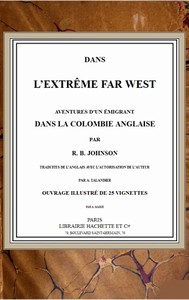
Dans l'extrême Far West: Aventures d'un émigrant dans la Colombie anglaise
Published in 1872, Dans l'extrême Far West is R. Byron Johnson's first-hand account of leaving England for the goldfields of British Columbia in the 1860s. It's not a novel; it's his personal travelogue, written as events unfolded.
The Story
Johnson arrives in Victoria with big dreams, only to find a rough, expensive boomtown. The story follows his journey from there into the rugged interior, chasing rumors of gold. He describes the backbreaking work of prospecting, the makeshift camps, and the dangerous river travel in dugout canoes. It's a cycle of hope and disappointment. He meets a wild cast of characters: other hopeful immigrants, Indigenous guides, American prospectors, and shady opportunists. The 'plot' is the daily grind of survival—finding food, building shelter, and navigating a social landscape with no clear rules. There's no single villain, just the relentless pressure of the environment and the constant gamble of the search.
Why You Should Read It
What makes this book stick with you is Johnson's voice. He's observant, often funny, and sometimes painfully honest about his own naivety. You feel his frustration when his civilized manners get him nowhere, and his awe at landscapes completely alien to him. The book works because it's so personal. You're not getting a dry history lesson; you're getting one man's confused, amazed, and weary perspective on a defining moment for Canada. It strips away the Hollywood gloss and shows the frontier for what it often was: muddy, lonely, and brutally hard. His descriptions of the natural world are particularly vivid—you can almost feel the cold river water and hear the silence of the vast forests.
Final Verdict
Perfect for readers who love real adventure stories and firsthand historical accounts. If you enjoyed the gritty detail of books like The Oregon Trail by Rinker Buck or the personal journeys in Jon Krakauer's work, you'll find a kindred spirit in Johnson. It's also a great pick for anyone curious about Canadian history from a ground-level view, not a textbook one. Fair warning: it's a journal from the 19th century, so some attitudes will feel dated or jarring to a modern reader. But if you can view it as a time capsule, it's a completely gripping and surprisingly human look at the dreams and harsh realities that built a part of the world.
This masterpiece is free from copyright limitations. It serves as a testament to our shared literary heritage.
Kimberly Walker
2 months agoI have to admit, it manages to explain difficult concepts in plain English. Truly inspiring.
Elizabeth Wilson
1 year agoEnjoyed every page.
William Lewis
1 year agoVery interesting perspective.




Aiden Thomas
1 year agoRead this on my tablet, looks great.