
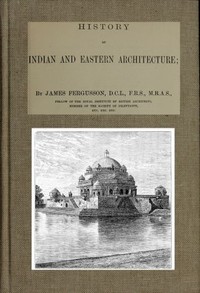
History of Indian and Eastern Architecture by James Fergusson
Okay, let's be clear: this isn't a novel. There's no fictional plot. But the 'story' here is the incredible, real-life puzzle James Fergusson tried to solve.
The Story
Imagine it's the 1800s. Europeans are fascinated by India, but its ancient buildings are a confusing jumble. Is that temple 500 years old or 1500? Is this style Buddhist or Hindu? Fergusson arrived with a merchant's eye and an artist's passion. He decided to create the first-ever organized history of architecture for the entire Indian subcontinent and beyond, into places like Cambodia and Java. The 'plot' follows his journey as he categorizes everything. He separates Buddhist rock-cut caves from later Hindu temple towers. He traces the evolution of the Islamic arch and dome under the Mughals. He argues about dates, styles, and influences, creating a brand-new framework to understand it all. The drama comes from his strong opinions—he loved some styles and was brutally honest about others—and from seeing how his work laid the foundation for all future study.
Why You Should Read It
You should read this not for dry facts, but for the perspective. Fergusson writes with the energy of someone making discoveries. His descriptions make you see the logic in a temple's carvings or the political power in a palace's layout. Yes, his 19th-century British viewpoint shows through, and that's part of the interest—it's history told through the lens of its time. But his genuine awe for the skill of the builders shines through. Reading him, you start to see architecture as a language. A curved roof tells you you're in Nepal. A specific type of spire points to southern India. It turns a beautiful building into a storybook written in stone.
Final Verdict
This book is perfect for curious travelers, history fans, or anyone who loves a good origin story. It's not a quick, easy read; it's a deep, rewarding one. Think of it as the ultimate companion for your next trip to India or Southeast Asia, or for when you're browsing museum archives online. It's for the person who looks at a monument and asks, 'But why does it look like that?' Fergusson spent his life finding the answers, and his passion is still contagious today.
This book is widely considered to be in the public domain. It is now common property for all to enjoy.
Ashley Davis
7 months agoA bit long but worth it.
Mary Moore
1 year agoLoved it.
Anthony Garcia
5 months agoI didn't expect much, but the narrative structure is incredibly compelling. I will read more from this author.



Andrew Moore
1 year agoGood quality content.