
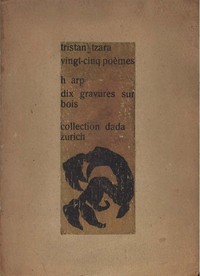
Vingt-cinq poèmes by Tristan Tzara
Okay, let's be clear: there is no 'plot' here in the normal sense. 'Vingt-cinq poèmes' is an experience, not a narrative. Published in 1918, it's a collection of twenty-five poems that actively rebel against the idea of what a poem should be. Tzara famously created some of these using a cut-up technique: taking words from newspapers, putting them in a bag, shaking them, and pulling them out at random to form the poem. The result is a whirlwind of disjointed phrases, invented words, and typographic play.
The Story
There isn't one linear story. Instead, each poem is a little battlefield. Words fight against their own meanings. Sentences start and then collapse. It's a performance of chaos on the page. You might get a snippet that sounds political ('war,' 'cannon'), followed by complete nonsense syllables, next to a surprisingly tender word like 'butterfly.' The 'story' is the journey of your own confusion and surprise as you turn each page.
Why You Should Read It
I love this book because it's so weirdly alive. Reading it feels like being in a noisy, avant-garde cafe in 1918 Zurich. You can feel Tzara's anger and frustration with a world destroyed by war, and his brilliant, silly way of fighting back: by destroying the rules of art. It's not about being 'deep' in a traditional way; it's about being free. The poems are playful, aggressive, and strangely musical if you read them out loud. They remind you that language is just a tool, and we can take it apart and put it back together in new, shocking ways.
Final Verdict
This is not for everyone. If you want cozy, rhyming verses, run away. But if you're curious about where modern art and poetry got some of its wildest ideas, this is essential reading. It's perfect for art students, punk rock fans, language nerds, or anyone who thinks rules are meant to be broken. Approach it like an art gallery, not a novel. Spend ten minutes with one poem. Read it aloud. Laugh at its absurdity. Feel its anger. It's a short, powerful punch from a century ago that hasn't lost its sting.
There are no legal restrictions on this material. Feel free to use it for personal or commercial purposes.
Joshua Miller
1 year agoAfter hearing about this author multiple times, it provides a comprehensive overview perfect for everyone. This story will stay with me.
Aiden Martinez
1 year agoLoved it.
Kevin Flores
8 months agoFast paced, good book.
Susan Jackson
10 months agoEssential reading for students of this field.
Christopher Hill
1 year agoAfter hearing about this author multiple times, the author's voice is distinct and makes complex topics easy to digest. A valuable addition to my collection.