
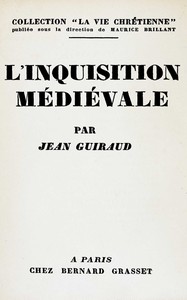
L'Inquisition médiévale by Jean Guiraud
Jean Guiraud’s L'Inquisition médiévale is a classic study that takes you inside the engine room of medieval religious enforcement. Written in the early 20th century, it’s a detailed map of how the Inquisition worked, from its founding to its daily operations.
The Story
There isn’t a single plot with characters, but there is a clear narrative: the birth and life of an institution. Guiraud traces its origins from the fight against the Cathar heresy in southern France. He walks you through the whole process. How inquisitors were chosen and trained. How they conducted investigations, gathered testimonies, and used interrogation. He explains the different types of punishments, from penances to the ultimate, terrible fate of being handed over to the secular authorities. The "story" is the slow, grinding procedure of identifying, trying, and sentencing people accused of holding the wrong beliefs. It’s a cold, administrative look at a hot, terrifying topic.
Why You Should Read It
You should read this because it forces you to think. Guiraud writes as a Catholic historian who believed in the Church’s authority. This gives his analysis a fascinating angle. He’s not an outsider screaming about injustice; he’s an insider explaining the rationale. He argues the Inquisition was a legal creation of its time, meant to protect the spiritual community from what was seen as a deadly disease. Reading his justification is as important as reading the facts. It shows how good people, or at least normal people, can participate in systems we now see as monstrous. The book’s power isn’t in graphic tales of torture (though they’re there), but in the quiet horror of bureaucracy used for persecution.
Final Verdict
This is a must-read for serious history fans and anyone interested in the dark intersection of religion, law, and state power. It’s not a light introduction—the prose is academic and the subject is dense. But if you’ve ever wondered how the Inquisition functioned day-to-day, beyond the myths, Guiraud provides the manual. Be prepared to engage with a perspective that may clash with modern views. It’s a challenging, sobering book that doesn’t just tell you what happened, but makes you wrestle with why it was allowed to happen.
This historical work is free of copyright protections. Knowledge should be free and accessible.
Edward Robinson
1 year agoFast paced, good book.
James Lee
1 year agoHonestly, the flow of the text seems very fluid. Don't hesitate to start reading.
Daniel Young
4 months agoI have to admit, it manages to explain difficult concepts in plain English. I will read more from this author.


Margaret Jackson
8 months agoIf you enjoy this genre, the content flows smoothly from one chapter to the next. Exceeded all my expectations.